
Leveraging 5G Technology to Drive Innovation and Creativity

Smart manufacturing leverages digitization and connectivity to enhance product quality, service levels, and operational efficiency. The concept of Industry 4.0—often called the Industrial Internet of Things (IIoT)—represents an advanced stage where machines are interconnected, operations automated, and entire production lines are visualized and capable of autonomous decision-making.
Although Smart Manufacturing and Industry 4.0 have been discussed for years, their true business impact is now accelerating. As early as 2016, the IEEE Sensors Journal highlighted that software increasingly defines the production process itself, not just supports it.
By 2018, analysts like KPMG projected Industry 4.0’s market value to reach $4 trillion by 2020, while Gartner estimated the IoT market at nearly $3.7 trillion. With technology advancing rapidly, now is the critical time for organizations to pilot and scale smart manufacturing solutions to remain competitive.
What Is Cyber-Physical Manufacturing?
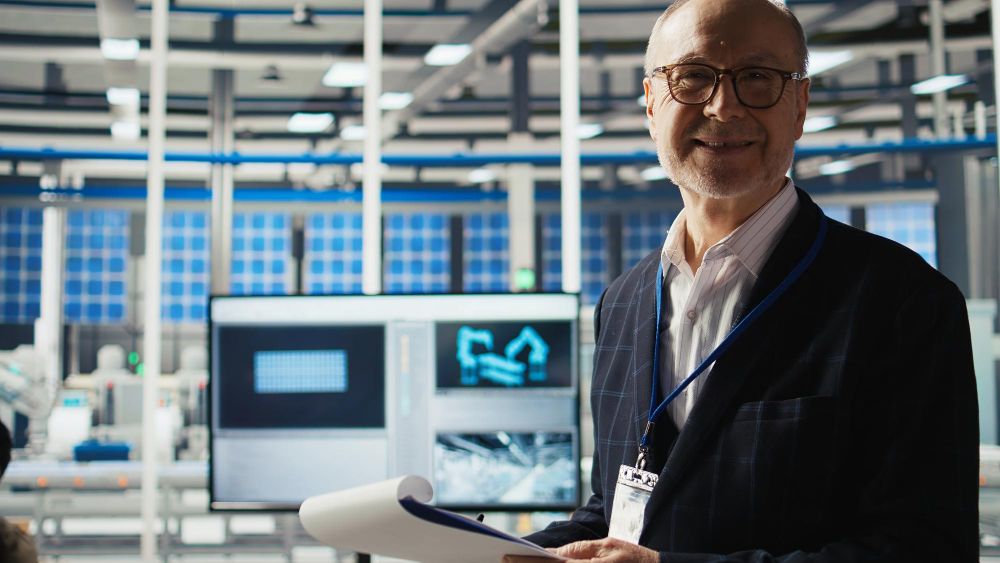
Smart manufacturing systems integrate physical assets with cyber components—software, networking, and computing—forming cyber-physical systems. These systems link hardware and software lifecycles tightly, enabling data-driven decisions, autonomous operations, and real-time process optimization.
However, integrating hardware operations and software development presents unique challenges because their lifecycles and dynamics differ significantly.
Opportunities of Smart Manufacturing and Industry 4.0
- Customer adaptability: Real-time sensor data enables mass customization and rapid responsiveness to changing market needs.
- Operational efficiency: Optimized processes reduce waste, energy consumption, and resource use.
- Predictive maintenance: Software-driven insights extend asset life and minimize downtime.
- Supply chain optimization: Enhanced visibility across production and logistics.
- New business models: Manufacturers can move up the value chain by offering services (e.g., maintenance, analytics) alongside physical products.
Despite these advantages, developing and deploying smart manufacturing solutions require significant investments, especially in integrating hardware and software.
Challenges in Piloting and Scaling Smart Manufacturing
- Cost: Testing combined hardware-software systems is expensive. Pilots are often small-scale and may not translate smoothly to factory-wide deployments.
- Mindset differences: Software developers and production engineers have distinct approaches and priorities, complicating collaboration.
- Technical integration: Hardware and software use different tools, lifecycles, and operational models. Manufacturing environments often rely on legacy proprietary platforms, and wired networks (up to 80%) may lack the flexibility for IoT demands. Emerging technologies like 5G promise to improve connectivity, enabling wireless integration of machines and sites.
Moreover, software lifecycles are faster and more flexible, while hardware changes are costly and constrained by strict quality and timing controls.
Industrial DevOps & Software Defined Labs by Yoter Up
To address these challenges, Yoter Up applies Industrial DevOps—the extension of DevOps principles to the development and operations of cyber-physical systems.
- Industrial DevOps fosters closer collaboration between software developers and production teams.
- It accelerates delivery and improves quality by integrating continuous integration/continuous deployment (CI/CD) pipelines.
- Automation and virtualization/emulation of hardware components reduce costs and enable faster, risk-reduced piloting.
Software Defined Labs (SDL) are a key Yoter Up innovation:
- SDL provides a virtualized environment where hardware and software components are emulated.
- It supports automated end-to-end testing and integrates with existing CI/CD systems.
- SDL allows rapid setup of test benches and flexible configuration testing without relying on physical hardware.
- It supports the entire solution lifecycle—pre-deployment, deployment, and in-process operation—and facilitates smooth scaling.
This approach reduces risks, shortens development cycles, and boosts the quality and reliability of smart manufacturing solutions.
How to Move Forward with Smart Manufacturing
To create scalable, successful smart manufacturing pilots and deployments, organizations should:
- Automate machine operations to enable digital control and monitoring.
- Implement a DevOps environment with continuous integration and deployment to accelerate time-to-market.
- Foster collaboration between software developers and production engineers through integrated workflows.
- Leverage Software Defined Labs or equivalent virtualization setups for automated testing, piloting, and scaling without costly reliance on physical assets or full digital twins.
<b>Yoter Up’s expertise in Industrial DevOps and Software Defined Labs empowers manufacturers to overcome traditional barriers, innovate faster, and realize the full benefits of Industry 4.0.</b>